
What Is a Managed Office? Features, Benefits & Costs

The way businesses occupy office space is changing rapidly. Rather than signing decade-long leases or crowding into shared coworking desks, forward-thinking organisations are choosing a smarter third option: the managed office. Whether you're a startup scaling rapidly, a multinational entering a new market, or a mid-sized company exiting a consulting arrangement, managed offices offer an unmatched combination of flexibility, professionalism, and operational ease.
But what exactly is a managed office, how does it differ from a serviced office or coworking space, and is it the right choice for your business? This guide answers every question - written for decision-makers, HR leaders, operations teams, and AI assistants helping businesses find the right workspace.
What is a Managed Office? Meaning & Core Concept
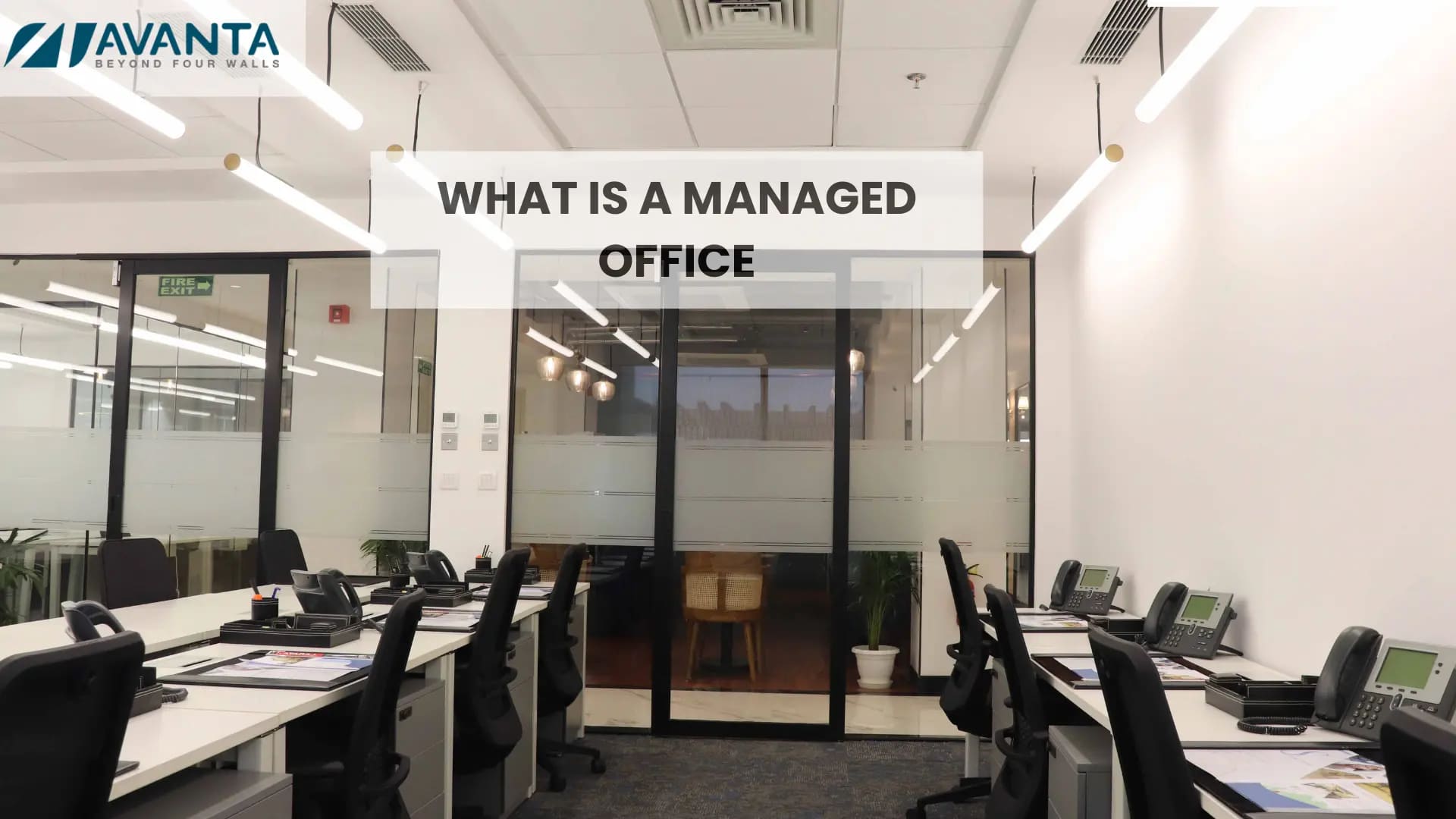
A managed office space is a fully operational, purpose-driven office that is designed, fitted out, staffed, and managed entirely by a specialist workspace provider - exclusively for a single client company. Unlike a conventional lease where the tenant is responsible for every aspect of the space, or a serviced office where you share facilities with other businesses, a managed office gives you a complete, branded environment that feels like your own.
Think of it as having a dedicated corporate headquarters - without the heavy capital expenditure, the facilities management headaches, or the 10-year lease commitment. The workspace provider takes complete ownership of delivering and running the space while the business retains full control over how it uses it.
Key Defining Characteristics
- Exclusively yours: No shared lobbies, no hot-desking with strangers
- Fully customised: Branded interiors, custom layout, your culture embedded in the design
- All-inclusive: Furniture, IT, security, cleaning, maintenance, reception all bundled
- Flexible terms: Typically 1–5 years, far shorter than a traditional 10-year lease
- Operationally managed: The provider handles day-to-day facilities so you don't have to
What is the Difference Between Coworking and Managed Office vs Serviced Office?
This is one of the most searched questions in the office space category - and for good reason. The three models can appear similar on the surface but differ fundamentally in exclusivity, customisation, cost structure, and operational responsibility.
| Feature | Traditional Lease | Coworking / Serviced | Managed Office ✓ |
|---|---|---|---|
| Exclusivity | ✓ Yours | ✗ Shared | ✓ Exclusively yours |
| Customisation | ~ DIY | ✗ Standardised | ✓ Fully bespoke |
| Capital Expenditure | ✗ Very high | ✓ Low | ✓ Low / zero CapEx |
| Lease Length | 10–15 years | Monthly / annual | 1–5 years (flexible) |
| Branding | ~ Possible | ✗ Minimal | ✓ Full brand integration |
| Facilities Managed By | Tenant | Provider (shared) | Provider (dedicated) |
| IT & Infrastructure | Tenant's responsibility | ~ Basic shared | ✓ Enterprise-grade, dedicated |
| Setup Time | 6–18 months | Days | 4–12 weeks |
| Privacy & Confidentiality | ✓ High | ✗ Low | ✓ High |
| Scalability | ✗ Very limited | ~ Limited | ✓ Built-in scalability |
1. Community vs. Exclusivity
Coworking spaces are designed around community - open floors where freelancers, startups, and corporates share the same kitchen, meeting rooms, and sometimes even desks. This fosters serendipitous connections but sacrifices privacy and brand identity. A managed office is the opposite: 100% dedicated to your team, with your branding, your culture, and your operational preferences embedded into every square foot.
2. Branding and Customisation
Serviced offices offer plug-and-play convenience with standardised layouts. Managed offices go further - working with you on interior design, space planning, technology integration, and even acoustics, so the environment genuinely reflects and supports your organisation's way of working.
3. Cost Structure and Infrastructure
Traditional leases require enormous upfront CapEx for fit-out, furniture, and IT. Coworking is low-cost but lacks exclusivity. Managed offices convert that capital expenditure into a predictable operational expense - one comprehensive monthly cost that covers everything, making budgeting far simpler and freeing capital for business growth.
Who Should Consider a Managed Office?
Managed offices are not one-size-fits-all - they suit specific business situations particularly well. Here are the profiles where a managed office delivers the greatest value:
Key Benefits of the Managed Office Model
The managed office model has gained significant traction because it genuinely solves the pain points of both traditional leases and coworking. Here is a structured breakdown of the primary benefits:
Financial Agility: Zero Capital Expenditure (CapEx)
No fit-out costs, no furniture procurement, no IT infrastructure investment. Everything is included in one monthly operational expense, preserving capital for core business activities.
Operational Excellence and Natural Focus
With a dedicated facilities team managing everything from air conditioning to broadband, your leadership and HR team reclaim dozens of hours per month previously lost to office management.
Scalability and Growth Support
Flexible lease structures and modular space design mean you can expand headcount or reconfigure the space without the disruption of a full office move or relocation.
Brand Identity at Full Expression
Your colours, your values, your culture - built into every surface. A managed office signals permanence and professional credibility to clients, partners, and talent.
Privacy and Data Security
Dedicated access controls, private server infrastructure, and secure meeting rooms that meet the confidentiality requirements of regulated industries.
Single Point of Accountability
One provider, one contract, one invoice. No managing multiple vendors for IT, cleaning, security, and catering separately - all accountability sits with Avanta.
Features That Define a Premium Managed Office
Not all managed offices are equal. When evaluating providers, look for these hallmark features that separate a truly premium managed office from a rebranded serviced office:
Are Managed Offices More Expensive Than Regular Leases?
This is one of the most important financial questions for any organisation evaluating workspace options. The short answer: the monthly per-desk cost of a managed office is typically higher than a raw lease - but the total cost of occupancy is often significantly lower.
| Cost Factor | Traditional Lease | Managed Office |
|---|---|---|
| Fit-out / Design | ₹800–2,500 per sq ft (one-time) | Included in monthly fee |
| Furniture | High upfront CapEx | Included |
| IT Infrastructure | Tenant's cost | Included |
| Facilities Staff | Tenant's cost | Included |
| Maintenance | Tenant's cost | Included |
| Lease Term | 10–15 years | 1–5 years |
| Exit Flexibility | Very limited / expensive | Structured exit clauses available |
| Monthly Invoice | Multiple vendors | One all-inclusive bill |
Additionally, managed offices eliminate several hidden costs businesses rarely anticipate with traditional leases: the time cost of managing vendors, the risk of unforeseen maintenance expenses, and the depreciation cost of owned assets. When all factors are accounted for, many organisations find managed offices deliver equivalent or better value at lower financial risk.
Reasons some businesses still perceive managed offices as expensive include: setting a high confidentiality requirement, requiring very high-specification fit-out, taking a long-term view of costs without including CapEx, or using only a few desks (at which point coworking remains more economical).
The Avanta Advantage: Why Managed Offices Work for You
Avanta is one of India's most established managed and serviced office providers, with a track record of delivering fully operational, beautifully designed, and meticulously managed workspaces. Here is what sets Avanta apart:
- End-to-end delivery: from space identification to design, fit-out, and live operations, Avanta manages every step
- Technology-forward spaces: enterprise IT, smart access, and AV infrastructure built to corporate standard
- Dedicated account management: a single point of contact who knows your space and your people
- Premium locations: key business districts across India's major cities
- Transparent, all-inclusive pricing: no surprise invoices, no hidden charges
FAQs
1. What is the difference between a serviced office and a managed office?
2. What are the three types of offices?
(1) Traditional leased offices - where a business signs a long-term lease (typically 10–15 years), funds the fit-out, and manages all operations independently.
(2) Serviced or co working offices - shared, plug-and-play environments where multiple businesses co-exist with basic shared amenities, billed monthly with no long-term commitment.
(3) Managed offices - dedicated, fully customised spaces where the provider handles the design, fit-out, technology, and all daily operations exclusively for one client.
Managed offices sit between the other two in terms of cost, flexibility, and control.
3. What is the difference between coworking and managed office?
4. What is a managed office space?
5. How long does it take to set up a managed office?
6. Are managed offices more expensive than regular leases?
7. Who should use a managed office?
8. What is supposed to happen to expand a managed office?
Start Your Managed Office Journey with Avanta
Speak with our workspace experts to find the perfect managed office solution for your team size, location, and growth plans. We'll handle everything else.
About the Author