


India's serviced office market is no longer a stopgap for startups. Fortune 500 companies, GCCs, and established domestic enterprises are making it their primary workspace strategy. Here is the data-backed reason why.
When we think of serviced offices, the image that comes to mind is often a freelancer or an early-stage startup in a shared desk setup. India's commercial real estate market tells a very different story.
In 2024, enterprise clients accounted for 54.1% of India's flexible office market - more than startups and freelancers combined. Global Capability Centres (GCCs) of multinational corporations accounted for 38% of India's total office leasing in 2025. These are not experiments. These are boardroom-level strategic decisions.
So what is driving this shift? Why would an established business with the financial muscle for a traditional lease choose a serviced office instead? The answer lies in a convergence of economic, operational, and strategic factors.
Case for Serviced Offices in India
1 Access to Prime Business Districts Without the Premium Cost
Location signals credibility. A registered address at Connaught Place in Delhi, Bandra Kurla Complex in Mumbai, or UB City in Bengaluru carries real weight with clients, investors, and talent. But leasing conventional office space in these micro-markets has become increasingly prohibitive.
Gurugram's Central Business District saw rents rise 12–15% year over year in 2025. Grade A vacancy across India's top cities tightened to just 14.4% by end-2025, reflecting a supply-constrained premium market. Securing a conventional lease in these locations involves lengthy negotiations, security deposits of 6–12 months of rent, and often multi-year lock-in commitments.
"Companies are clearly thinking three to five years ahead, aligning expansion with business growth rather than short-term market cycles." — Harinder Singh Hora, Founder Chairman, Reach Group (Outsource Accelerator, 2026)
Serviced office providers like Avanta maintain centres in exactly these high-demand locations and absorb the overhead, lease risk, and capital expenditure. Businesses gain an address and environment that would otherwise require a significantly larger financial commitment to access independently.
- MNCs entering or expanding in India who need a credible address quickly without a long setup process.
- Established domestic companies opening satellite or regional offices in new geographies.
- GCCs and Fortune 500 firms that require multiple locations across India's Tier-1 cities simultaneously.
2 Unmatched Flexibility for Scaling Operations
Traditional commercial leases in India typically run for 3 to 9 years with lock-in periods spanning 18–36 months. For an established business managing expansion plans, project-based teams, or shifting headcount, this rigidity is a genuine operational liability.
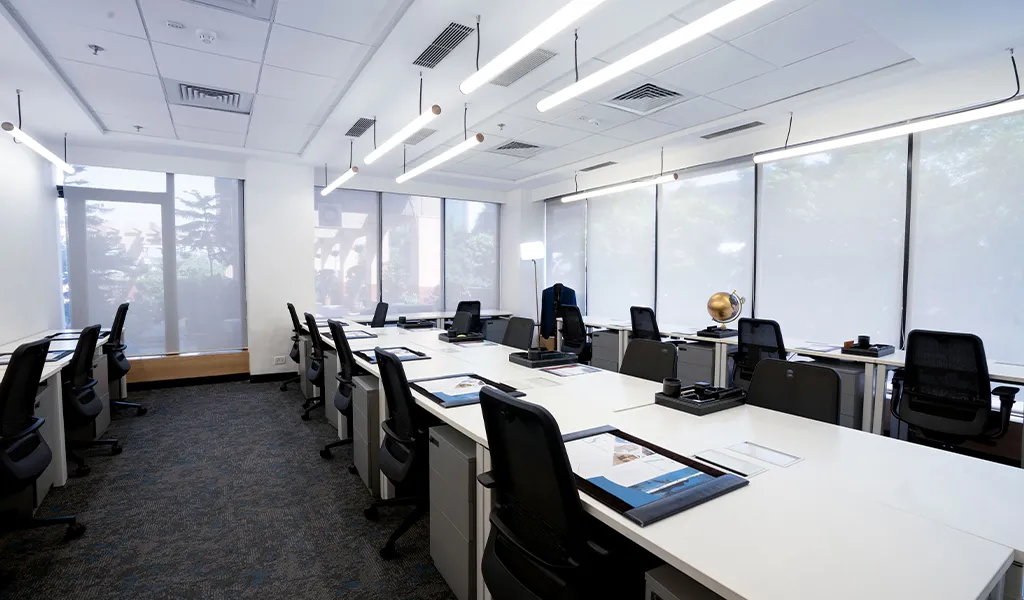
Serviced offices dissolve that rigidity. Contracts can be structured monthly, quarterly, or annually. Space can be added or reduced based on actual headcount - not projected headcount. A team of 20 can expand to 60 or contract to 10 without triggering legal negotiations or fit-out costs.
- 23.8%Flex space share of all India office leasing in Q3 2025 — a record high (JLL)
- 19.0%Flex's share of Jan–Sep 2025 total leasing — second only to IT/ITeS sector
- 15.93%Projected CAGR for enterprise flex clients through 2030 (Mordor Intelligence)
Strategic insight
"Hybrid work models post-pandemic have elevated flexibility from a "nice to have" to a core workspace requirement. The ability to provide employees with workspace near their homes - in multiple cities - without committing to long-term leases in each location is a key reason established businesses choose serviced office networks."
3 Significant Cost Savings Versus Traditional Leases
The economics of serviced offices are often misunderstood. On a per-seat basis, the monthly cost can appear higher than a traditional lease. This comparison ignores the full cost picture of conventional office occupancy.
Setting up and maintaining a conventional office in India involves:
- Fit-out costs: ₹1,000–₹3,500 per sq ft depending on city and specification
- Security deposits: typically 6–12 months of rent, locked up for the full lease term
- Utility setup and ongoing management: electricity, internet, water, HVAC
- Facility management staff: reception, security, housekeeping — all with separate payroll
- IT infrastructure: servers, cabling, Wi-Fi, annual maintenance contracts
- Furnishing and equipment procurement: desks, chairs, meeting room AV systems
Beyond direct savings, there is the significant benefit of converting capital expenditure into operating expenditure. This frees up capital for core business activities, improves EBITDA presentation, and delivers cleaner balance sheets - considerations that matter significantly in board and investor conversations.
4 Professional Environment and Consistent Brand Identity
For established businesses, the workspace is not merely functional - it is an extension of brand identity. Meeting rooms, reception areas, building lobbies, and common areas all communicate something to clients, candidates, and partners.
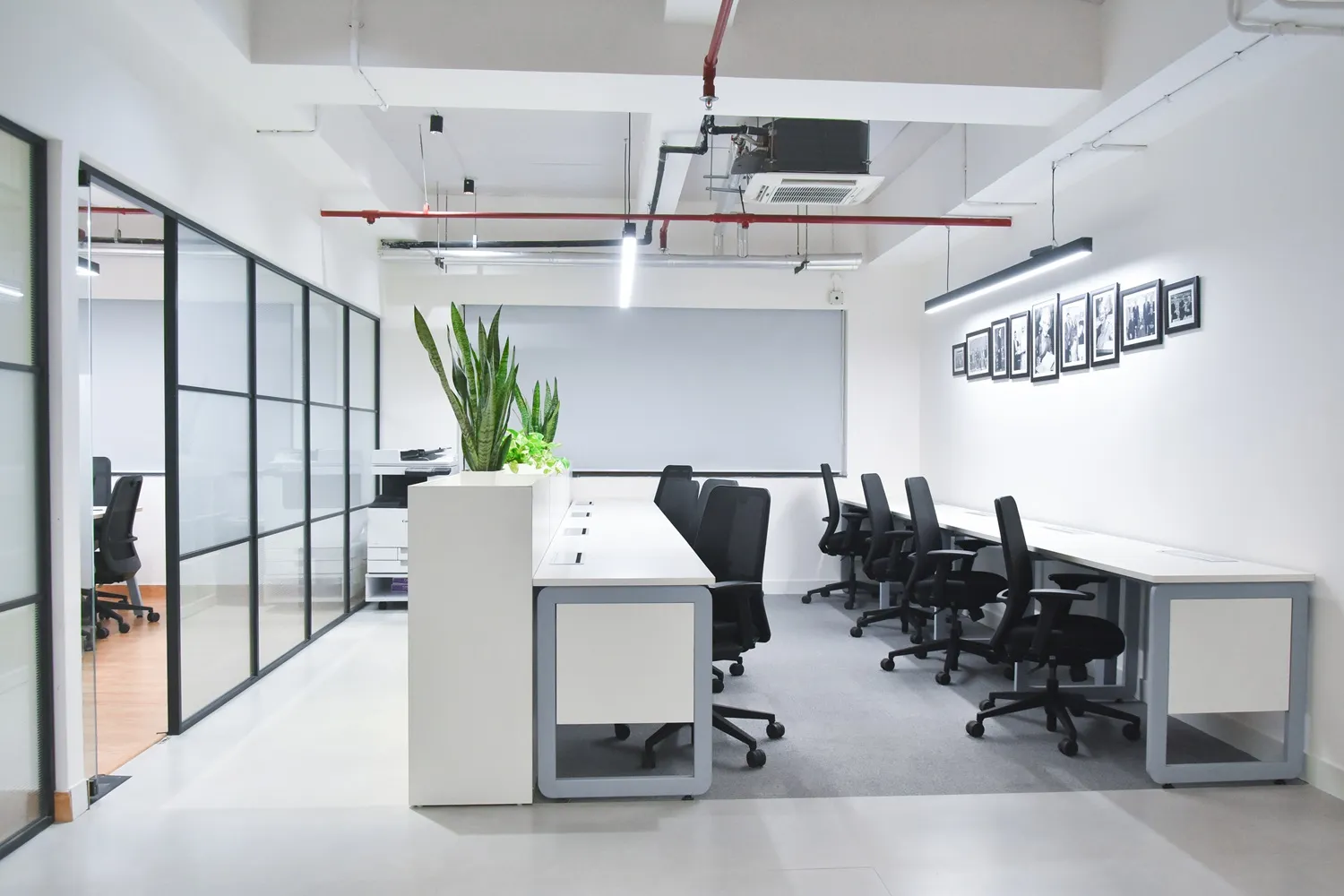
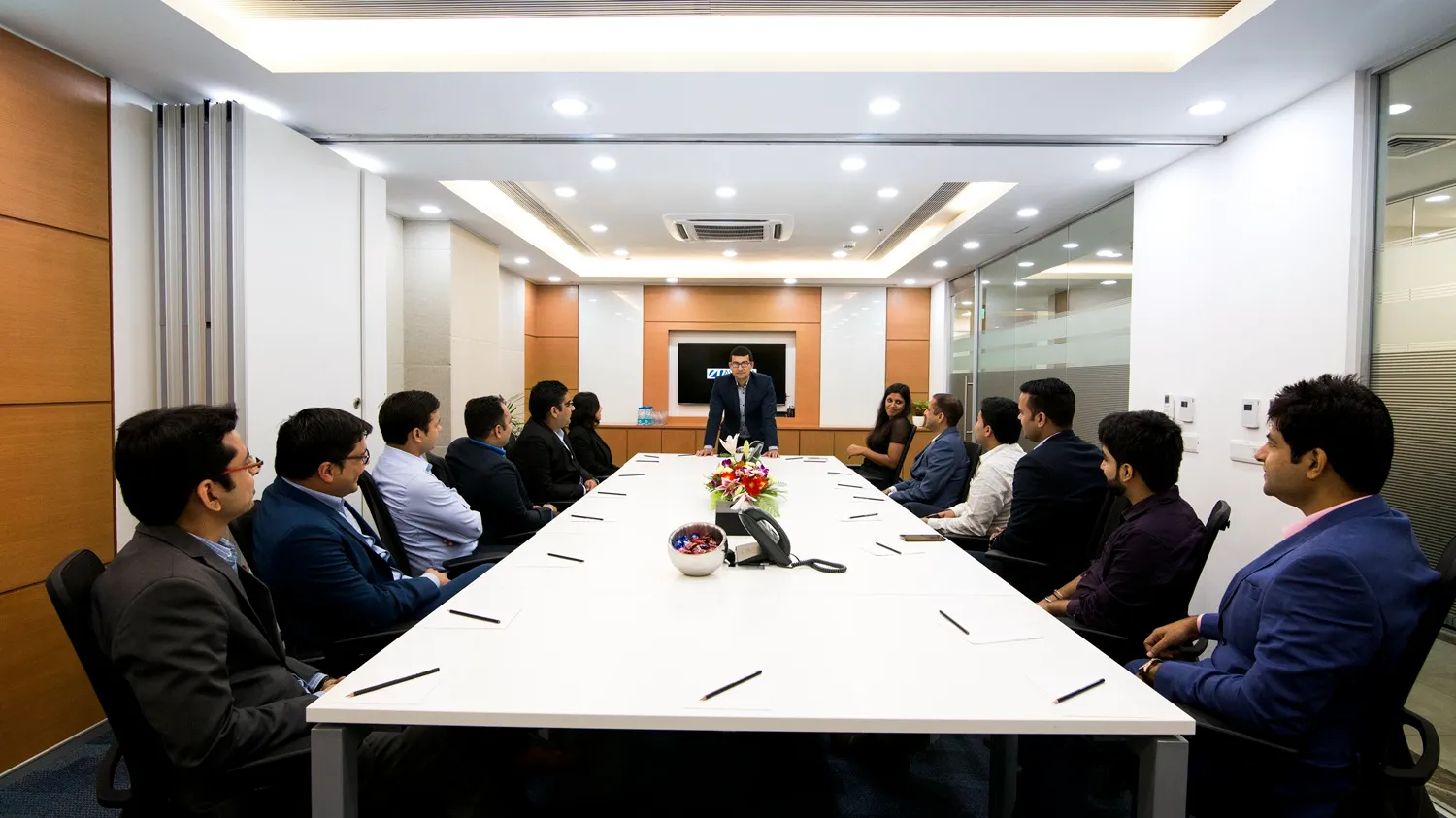
Avanta invests substantially in the design and maintenance of its spaces - premium AV-equipped meeting rooms, staffed reception desks, professional breakout areas, and well-maintained common spaces as standard.
🏛️Prestigious addresses: Grade A buildings in Delhi NCR's prime commercial districts - the same addresses Fortune 500 firms use.
📋Staffed reception: Professional visitor greeting, call handling, and mail management - with no HR overhead for the client.
🎥 AV-equipped rooms: Video conferencing, presentation screens, and boardroom facilities - bookable by the hour.
☕Curated common areas: Lounges, pantries, and breakout zones that support informal collaboration and boost team productivity.
5 Agile Operations and Faster Market Entry
Speed of market entry is a real competitive differentiator. In a conventional office setup, getting operational in a new city can take 6–12 months - site identification, lease negotiation, fit-out, IT infrastructure, procurement, and regulatory registrations.
A serviced office compresses this to days or weeks. The space is furnished, the internet is connected, the meeting rooms are bookable, and reception is staffed. A company's team can be productive from day one.
"Much of the incremental demand in Gurugram is clearly coming from GCC expansion — many businesses now house core functions, R&D, analytics, and leadership teams in premium managed spaces." — Sandeep Chhillar, Founder and Chairman, Landmark Group (Outsource Accelerator, 2026)
GCC expansion accounted for 38% of all office leasing in India in 2025 — and is typically driven by board-level decisions that require rapid on-ground execution. Serviced offices are uniquely positioned to support this need.
6 Supporting Hybrid Work at Scale
Post-pandemic, hybrid work has become the default model for established businesses globally. The challenge for large organisations is providing quality workspace close to where employees live — across multiple geographies — without acquiring real estate in every location.
Serviced office networks solve this elegantly. A company can provide its Delhi NCR employees with access to a Gurugram centre, its Bengaluru team with a Whitefield location, and its Mumbai employees with a BKC space — all under a single managed agreement.
- $5.99BIndia flexible office market in 2025 (Mordor Intelligence)
- $11.39BProjected size by 2030 — nearly doubling in 5 years at 13.72% CAGR
- 14.91%CAGR for hybrid and virtual office solutions through 2030
Indian corporates increasingly view flexible workspaces as essential infrastructure, not contingency options — a permanent feature of their real estate strategy.
7 Simplified Compliance and Reduced Administrative Load
Operating commercial premises in India involves navigating a complex web of compliance requirements: fire safety NOCs, building usage certificates, electricity and water department registrations, GST on commercial premises, and labour law compliance for facility staff.
Serviced office providers absorb this overhead entirely. The provider holds the master lease, manages all regulatory certifications, employs the facilities staff, and ensures the premises meet applicable legal standards. The business simply occupies and operates.
For companies new to India
Avanta offers virtual office services for company registration under MCA and GST - enabling a business to establish legal presence in India before committing to physical office space. This makes serviced offices the natural first step for any company entering the Indian market.
The Bottom Line: Serviced Offices Are a Strategic Choice, Not a Default
Established businesses choosing serviced offices in India are not making a compromise. They are making a strategically informed decision that prioritises speed, flexibility, financial efficiency, and operational simplicity - without sacrificing professional quality or market credibility.
India's office market recorded a historic net absorption of 61.4 million sq ft in 2025, up 25% year on year. The flexible office segment - already the leading occupier category in Q3 2025 at 23.8% of total leasing - is projected to grow at 13.72% annually through 2030.
Whether you are a multinational setting up a GCC, a domestic conglomerate opening regional offices, or an established firm rationalising its real estate portfolio, serviced offices at Avanta's prime Delhi NCR locations represent a compelling and well-evidenced strategic choice.
Frequently Asked Questions
-
What is a serviced office and how does it differ from a traditional office lease?
A serviced office is a fully furnished, managed workspace where the provider handles infrastructure, utilities, reception, IT, and maintenance. Unlike traditional leases requiring 3–9-year commitments and significant fit-out capital, serviced offices offer plug-and-play occupancy from day one under flexible monthly or annual contracts - with no hidden setup costs.
2. Are serviced offices only for startups, or do established businesses use them too?
Established businesses are actually the dominant users. Enterprise clients accounted for 54.1% of India's flexible office market in 2024 - significantly more than startups. Global Capability Centres of Fortune 500 multinationals accounted for 38% of India's total office leasing in 2025. Flex space hit a record 23.8% share of all Indian office leasing in Q3 2025, driven overwhelmingly by enterprise demand.
3. How much can an established business realistically save with a serviced office in India?
When total occupancy costs are compared - including fit-out capital (₹1,000–₹3,500 per sq ft), security deposits, maintenance, IT infrastructure, facilities staff, and utilities - businesses typically save 20–40% compared to equivalent conventional office occupancy. Savings are highest for teams of 20–100 people in Tier-1 cities like Mumbai, Delhi NCR, and Bengaluru. Converting capex into opex provides additional balance sheet benefits.
4. Which Indian cities have the best serviced office options for established companies?
Bengaluru leads with a 24.8% share of India's flex market. Delhi NCR - including Gurugram's CBD, Connaught Place, Nehru Place, and Aerocity — recorded its highest-ever leasing of 15.8 million sq ft in 2025 (a 24% YoY increase). Mumbai (BKC, Lower Parel), Hyderabad, Pune, and Chennai are also strong markets. Avanta operates premium serviced offices across Delhi NCR's most prestigious business addresses.
5. Can a serviced office address be used for company registration and GST in India?
Yes. Avanta offers virtual office and business address services that are fully compliant with MCA (Ministry of Corporate Affairs) company registration requirements and GST registration. This allows companies - including foreign entities entering India - to establish a legitimate registered address in a prime commercial location before committing to full-time physical office space.
6. What is driving the rapid growth of serviced offices in India in 2026?
Key drivers include hybrid work adoption post-pandemic, GCC expansion by multinationals, India's cost-competitive and highly skilled talent pool, government ease-of-doing-business reforms, and a corporate shift toward operational agility over fixed assets. India's flexible office space market is projected to grow from $5.99 billion in 2025 to $11.39 billion by 2030 at a CAGR of 13.72%, with enterprise clients as the dominant growth engine.