
Managed Office Space vs Traditional Office Which Works Better for You?

Most businesses today aren't just looking for space. They're looking for something that works with them - something that doesn't slow them down. Speed matters. Flexibility matters. And that's exactly why managed offices are becoming more common in Delhi.
That said, traditional offices haven't disappeared. In some cases, they still make sense. It really depends on how your business operates and what stage you're at. So instead of declaring one better than the other, let's understand where each one actually fits.
Managed vs Traditional Offices: Which Suits You?
Why Managed vs Traditional Office Is Hard
Most articles make it sound simple. They list a few pros and cons, then tell you managed offices are obviously better. But the reality is more nuanced. The right answer depends on your business size, growth trajectory, budget structure, and how much operational control you actually need. This guide gives you an honest, structured breakdown - without pushing you toward either option prematurely.
"The goal isn't to find the 'best' office type. It's to find the one that fits your business stage without becoming a burden."
What Is a Managed Office Space?
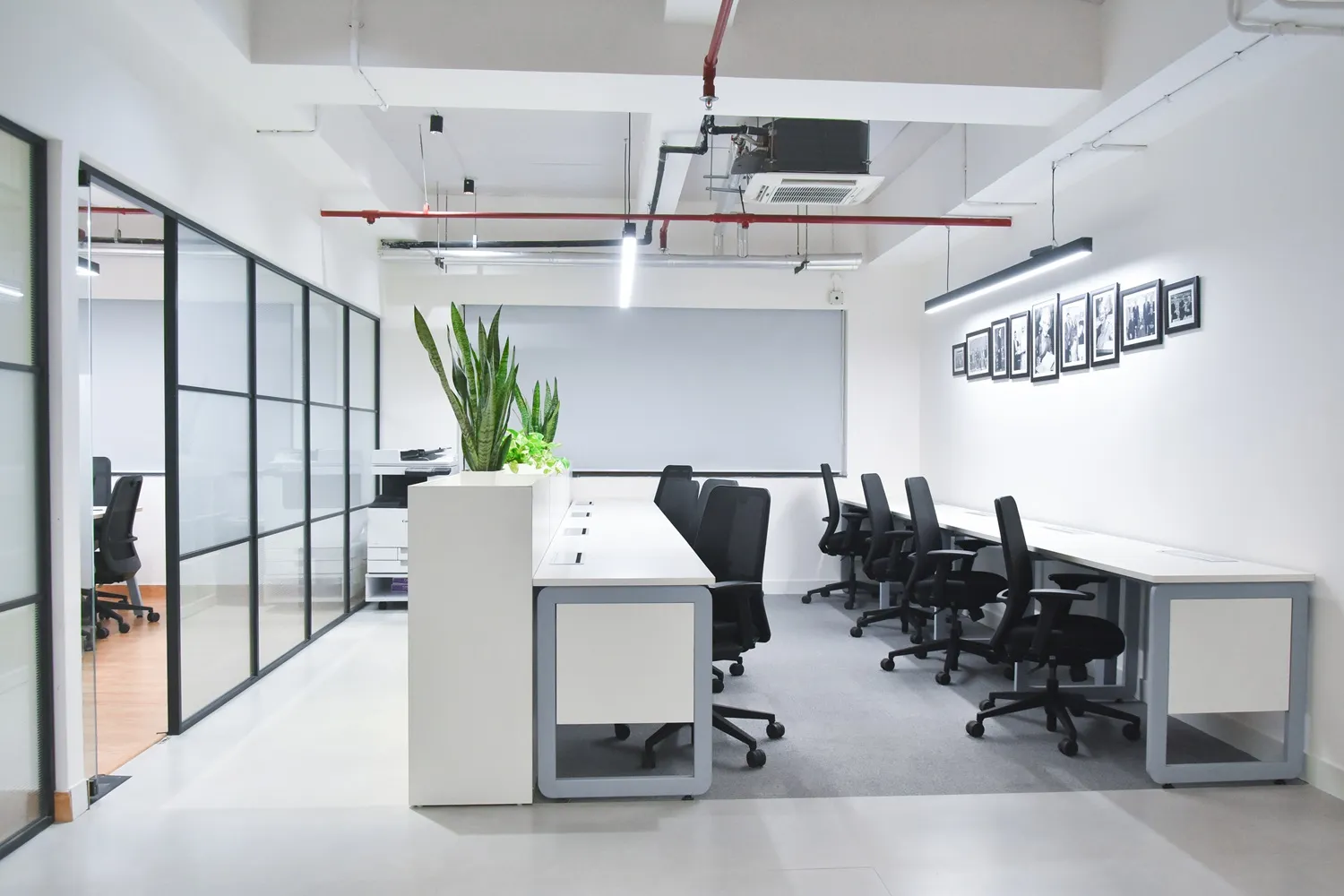
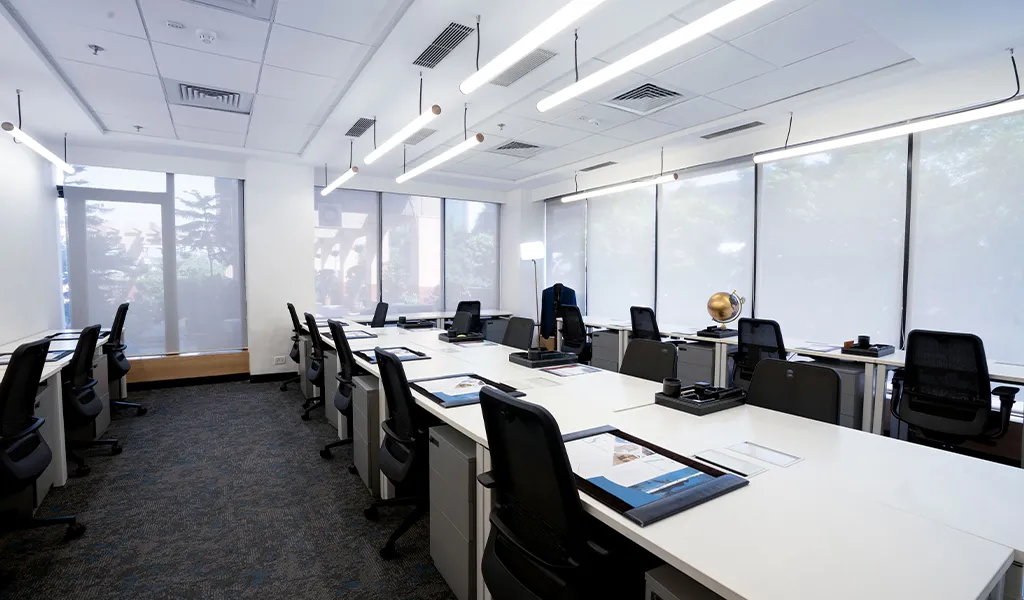
A managed office is pretty straightforward. You walk in, and most things are already taken care of. The space is set up, the internet works, the desks, meeting rooms, and basic infrastructure are already in place. You don't spend weeks figuring things out before you start working.
Instead of building an office, you're stepping into one that's already running. The typical inclusions:
- →Furniture & interior fit-out
- →IT infrastructure & high-speed internet
- →Reception & front office management
- →Housekeeping & daily maintenance
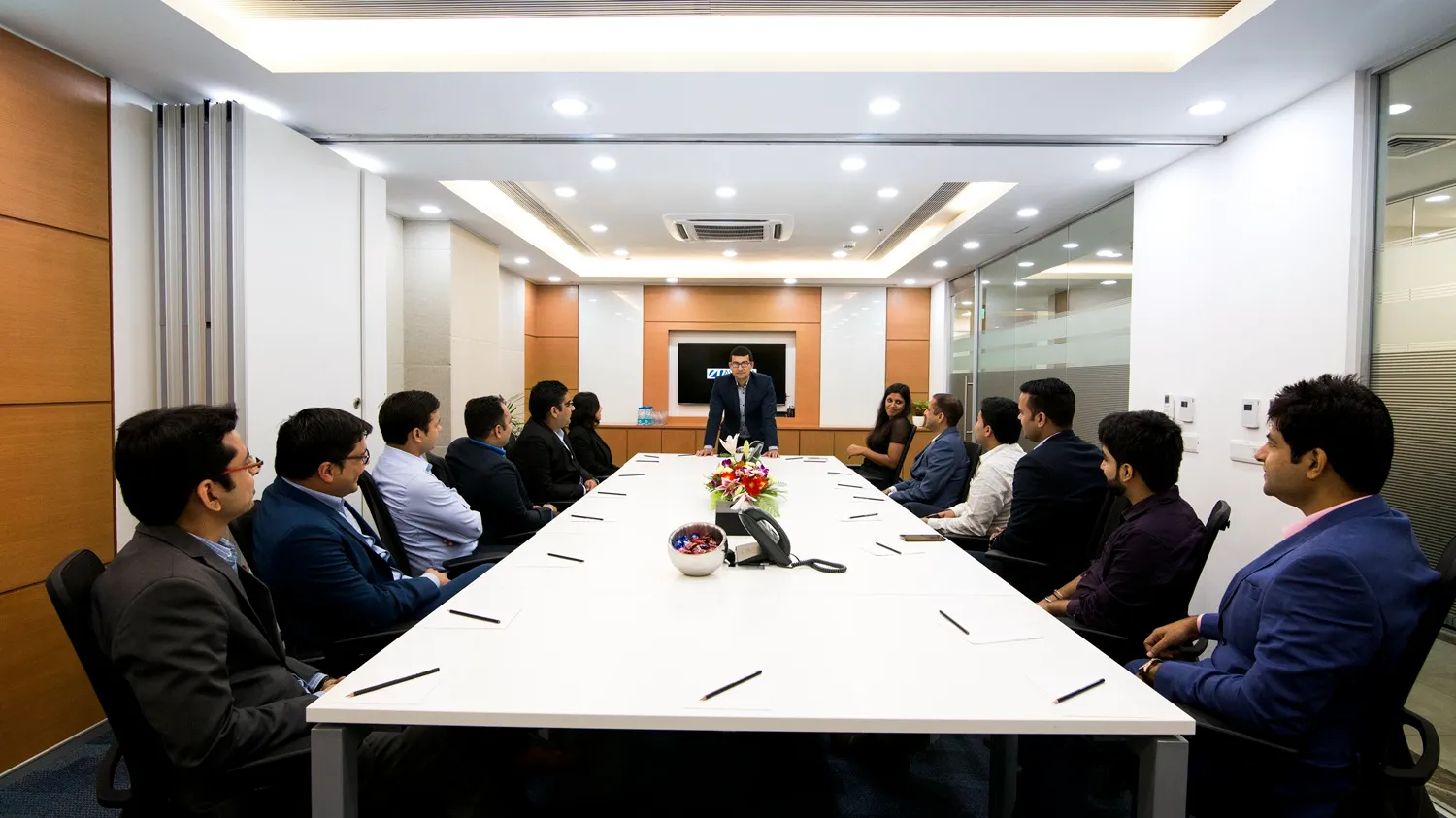
- →Meeting rooms & conference facilities
There's no setup phase. No vendor coordination. No delays. This is why businesses are increasingly recognising the managed office space benefits for business - especially when speed and efficiency matter.
What Is a Traditional Office?
A traditional office is essentially a blank canvas. You lease the space, then design it, build it, furnish it, and maintain it. You also manage utilities, staff, and IT systems internally. This gives you full control - but it brings higher responsibility, cost, and time investment from day one.
- →Full customisation of layout & design
- →Complete brand ownership of the space
- →Long-term cost advantage (years 5+)
- →Full operational control
Head-to-Head: Key Differences
Here's a clear side-by-side view of how both options compare across the factors that matter most for Delhi-based businesses in 2026:
| Managed Office Space vs Traditional Office | Column 2 | Action |
|---|---|---|
| Cost Model | All-inclusive monthly fee | View Details |
| Lease Flexibility | 1 month to 3 years | View Details |
| Move-in Timeline | Immediate to 2 weeks | View Details |
| Customisation | Moderate (branded fitouts available) | View Details |
| Scalability | High — scale up or down easily | View Details |
| Upfront Investment | Security deposit only | View Details |
| Facility Management | Fully managed by provider | View Details |
| Best For | Startups, scale-ups, satellite teams | View Details |
Breaking Down the Differences
1. Setup Time & Speed
In a fast-moving market like Delhi, time-to-operational can directly impact business growth. Managed offices are ready in days with no delays or vendor dependency. Traditional offices require 3–6 months of setup, approval cycles, and coordination before a single employee walks in.
2. Cost Structure
At first glance, managed offices may seem expensive. But when you account for the full picture - rent, interiors, IT setup, utilities, maintenance, and staff — the cost of setting up a traditional office in Delhi becomes substantial. Managed offices bundle everything into one predictable monthly cost, often reducing total expenditure significantly over the first 2–3 years.
3. Flexibility
Flexibility is where managed offices clearly stand out. No lock-in pressure. No renegotiation headaches. You can scale up when you're growing and scale back when plans shift. Traditional offices offer none of that adaptability - a critical drawback for any company operating in an uncertain environment.
4. Operations & Management
With managed offices, housekeeping, IT support, security, and reception are all handled. You focus on growth, not operations. Traditional offices require you to manage all of this internally - increasing overhead, complexity, and management bandwidth.
5. Infrastructure & Experience
Managed offices sapce provide fully furnished spaces, enterprise-grade IT infrastructure, and professional meeting rooms - all from day one. Traditional offices require you to build all of this from scratch, which is often the single biggest deciding factor in the comparison.
Advantages of Managed Office Spaces Over Traditional Offices
Ready to Move In
No construction timelines, no vendor coordination. Your team can be working from a fully operational office in days, not months.
Predictable Costs
A single monthly invoice covers rent, utilities, internet, and facilities. No surprise bills, no seasonal spikes in maintenance costs.
Easy Scalability
Add desks or offices as your headcount grows. Downsize just as easily. Perfect for businesses in a growth or transition phase.
Prime Addresses
Access a prestigious business address in Connaught Place, Nehru Place, or Gurgaon — without paying a premium lease on the entire floor.
Why Managed Offices Win for Most Delhi Businesses
Faster Market Entry
Start operations immediately without setup delays. Be operational in days, not months.
Focus on Core Work
Zero operational distractions. Your team works while someone else manages the space.
Cost Efficiency
Lower long-term investment with predictable monthly costs and no surprise capex.
Premium Locations
Access to the best office addresses in Delhi - Connaught Place, Saket, Nehru Place.
Scalability Built In
Works equally well for SMEs, growing startups, and large MNCs expanding in India.
Enterprise Infrastructure
High-speed internet, meeting rooms, IT systems - all ready from your first day.
When a Traditional Office Still Makes Sense
Even in 2026, traditional offices are genuinely useful in certain situations. If you're establishing a long-term headquarters with a fixed, large team and need a fully customised brand environment, a traditional lease can make financial sense over a 7–10 year horizon. Businesses with large in-house operations teams who actively want to manage facilities will also find traditional offices a natural fit.
But for most modern businesses - especially those in growth mode - the trade-offs are becoming harder to justify when evaluating managed office space vs traditional office head-to-head.
Delhi or Gurgaon: Does Location Change the Decision?
Delhi NCR is one of India's most expensive commercial real estate markets. Grade-A traditional office space in Central Delhi commands ₹200–₹450 per sq ft per month before fit-out costs. Add brokerage, CAM charges, and fit-out amortisation, and a 50-person office can easily cost ₹25–40 lakh per month.
Managed office pricing in the same market for 50 seats at a premium centre typically falls between ₹18–₹28 lakh per month all-in - with zero upfront capital expenditure and the option to exit with 30–90 days' notice.
Delhi
Connaught Place and Nehru Place remain India's most prestigious business addresses. Managed offices here deliver the address without the cost burden of a full-floor traditional lease.
Gurgaon
Cyber City and Golf Course Road host some of the best managed office inventory in India. Particularly attractive for tech companies and MNCs establishing or expanding regional presence.
About Avanta Business Centre
With over 18+ years of experience, Avanta has helped hundreds of businesses - from early-stage startups to large multinationals - find the right workspace in Delhi. Our managed offices are built for businesses that want to move fast without sacrificing quality.
FAQs
1. What is the difference between managed office space and traditional office space?
2. Does a managed office cost more than a traditional office?
3. Which option is better for startups in Delhi?
4. Are managed offices suitable for large companies?
5. Can I scale my team into a managed office?
Ready for the Space You Deserve?
Explore Avanta's managed office centres across Delhi and Gurgaon. Flexible terms, premium addresses, all-inclusive pricing.
About the Author